If you are looking for a Connecticut shoreline community that feels both grounded and easy to live in, Old Greenwich stands out. It offers a rare mix of coastal recreation, village-scale convenience, and rail access that can shape your daily routine in meaningful ways. Whether you are considering a move, a second home, or simply want to understand the area better, this guide will show you what everyday living in Old Greenwich really looks like. Let’s dive in.
Old Greenwich Feels Like a True Shoreline Village
Old Greenwich is the original Town of Greenwich, first settled in 1640 and later known as Sound Beach. That history still shows up today in the way the area feels and functions. Rather than reading like a dense commercial center, it has the rhythm of a shoreline village with deep local roots.
The core along Sound Beach Avenue is especially central to that identity. Town planning documents describe a walkable district where shops, restaurants, the historic elementary school, and the train station sit close together. The scale remains notably human, with one- and two-story mixed-use buildings and a pedestrian-oriented layout.
That sense of place is not accidental. The Old Greenwich Village District Overlay Zone took effect on December 4, 2024, reflecting an active effort by the town to preserve the district’s character, architectural style, and walkability. For you, that means the setting is being shaped with long-term continuity in mind.
Daily Life Centers on Proximity
One of the strongest qualities of Old Greenwich is how much of life happens close together. Errands, coffee, library visits, train access, and outdoor time do not feel disconnected from one another. Instead, they are part of a compact daily pattern that many buyers find appealing.
This is one reason Old Greenwich often feels more integrated than sprawling. You are not just choosing a home here. You are often choosing your distance to the village center, the shoreline, Binney Park, and Metro-North.
For buyers, that makes location within Old Greenwich especially important. In many cases, homes are understood less as isolated properties and more by their relationship to the beach, park, village, and train.
Greenwich Point Park Shapes the Coastal Lifestyle
Greenwich Point Park, also known as Tod’s Point, is one of the area’s defining assets. The town describes it as a 147.3-acre, town-owned beach and recreation facility in Old Greenwich. It includes beaches, swimming areas, picnic areas, trails, concessions, restrooms, a boat yard, and kayak or paddleboard storage and launch access.
If you picture coastal living as something you can actually use on a regular basis, this park helps make that real. It is not simply scenic shoreline. It is a practical part of local recreation and routine.
The park is open from 6 a.m. to sunset, with passes required from May 1 through October 31. Leashed dogs are welcomed from December 1 through March 31, which adds another layer of year-round use. Those details matter because they help define the seasonal rhythm of living here.
Binney Park Adds Everyday Green Space
Binney Park is another major anchor in Old Greenwich. This 33-acre park was donated to the Town of Greenwich by Edwin Binney and dedicated in 1933. Today, the town notes that it includes walking paths, stone bridges, a gazebo, tennis courts, athletic fields, a playground, a pond, restrooms, and picnic space.
Where Greenwich Point Park speaks to the shoreline side of Old Greenwich, Binney Park supports everyday outdoor life in a different way. It offers space for walks, play, casual gatherings, and time outside without needing to make a full beach outing of it. The park is open from sunrise to sunset.
Together, these two destinations help explain why Old Greenwich has such a strong outdoor identity. In warmer months, life naturally tilts beach-first. In cooler seasons, the parks, paths, and off-season shoreline access continue to keep the outdoors in your routine.
Sound Beach Avenue Supports the Day-to-Day
The village center matters because it supports more than atmosphere. It supports ease. Sound Beach Avenue is where Old Greenwich feels especially practical, with a compact, walkable setup that connects daily needs with local character.
Perrot Memorial Library adds to that experience. It is an independent library that primarily serves the Old Greenwich community and offers current collections, children’s programs, and events. Its location on Sound Beach Avenue reinforces how civic life and village life overlap here.
There is also a strong civic-minded thread in the community. The Old Greenwich Association is a volunteer-based residents association focused on preserving the neighborhood’s spirit and supporting quality of life. For you as a buyer or homeowner, that helps explain why the area often feels both cared for and connected.
Commuting Is Part of the Appeal
Old Greenwich is not only about leisure. It also works well for people who need access beyond the village. Old Greenwich station on Metro-North’s New Haven Line gives residents a rail commute option, and the station includes ticket machines on site.
The Town of Greenwich also maintains commuter parking for the station. That detail underscores how important train access is to everyday life here. If your week includes time in other parts of Fairfield County or regular trips toward New York, that convenience becomes part of the value of living in Old Greenwich.
This blend is one of the area’s defining strengths. You can have a shoreline setting without giving up a functional connection to the region. For many buyers, that balance is exactly the draw.
Homes Reflect Scale, Setting, and Heritage
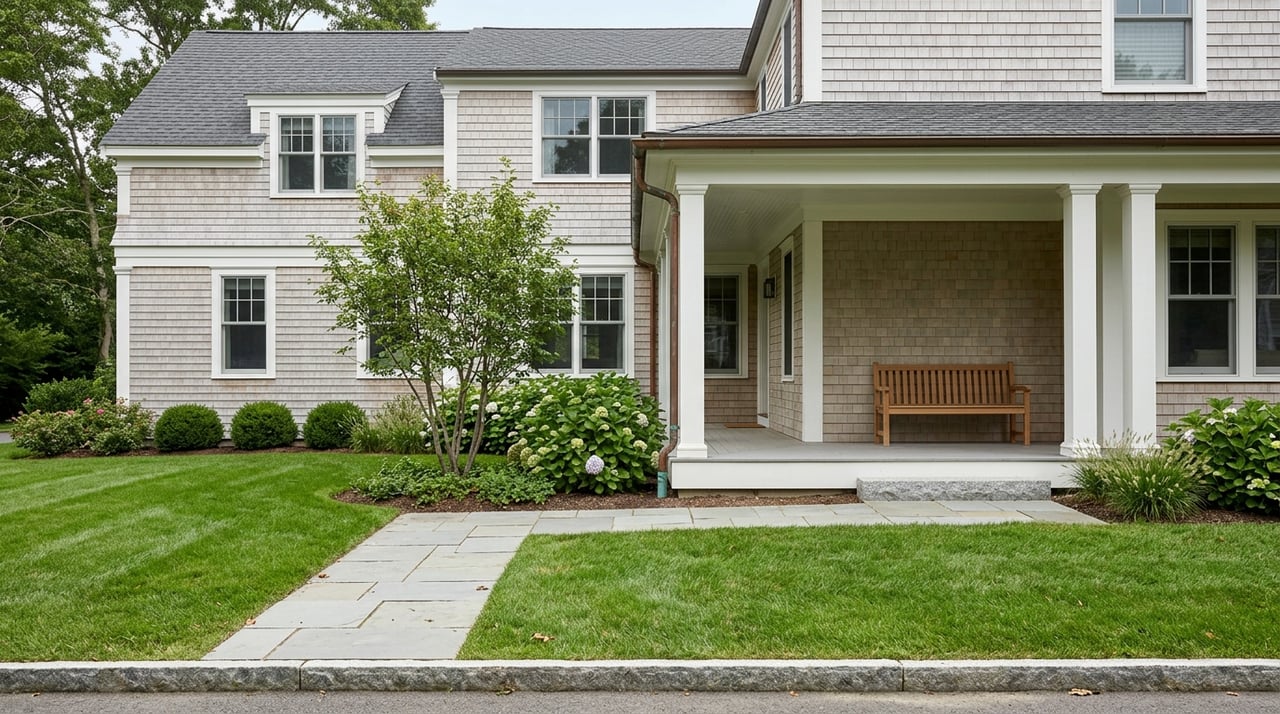
Old Greenwich and neighboring eastern Greenwich are described in town planning materials as mostly single-family territory. Many homes sit on quarter-acre lots, while larger waterfront properties are found closer to Long Island Sound. Between I-95 and the Metro-North tracks, the housing mix includes Cape Cods, Colonials, raised ranches, and contextual new construction.
That variety gives Old Greenwich visual texture. It is not a one-style market. At the same time, there is a consistent thread in scale and setting that helps the area feel cohesive.
Near the village center, town guidelines encourage features such as wood shingles, clapboard, brick, pitched roofs, and small-village proportions. Historical references tied to the shoreline also include Shingle-style and Colonial Revival architecture. Taken together, those influences support the refined coastal character many buyers associate with Old Greenwich.
What Buyers Should Notice Beyond Square Footage
In Old Greenwich, the most important question is often not just how large a home is. It is how the home lives within its setting. Proximity to the village, shoreline, train, and parks can shape daily experience as much as interior dimensions do.
That is especially true in a market where lifestyle is tied so closely to movement and access. A home near Sound Beach Avenue may offer a very different routine from one oriented more toward the waterfront or tucked farther from the village core. Neither is automatically better. They simply support different versions of Old Greenwich living.
For this reason, buyers benefit from looking at homes through a wider lens. Architectural style, lot scale, renovation potential, and everyday convenience all work together here.
Why Old Greenwich Continues to Stand Out
Old Greenwich offers something many buyers want but struggle to find in one place. It combines a true shoreline setting with village walkability, established architectural character, meaningful outdoor amenities, and train access. That combination gives the area both charm and function.
It also creates a lifestyle that feels steady rather than staged. You can spend a morning at the beach, run errands in the village, stop by the library, walk in the park, and still stay connected to a broader regional commute. That kind of daily flow is part of what makes Old Greenwich distinctive.
If you are evaluating where and how you want to live in Greenwich, Old Greenwich deserves a close look. Its appeal is not built on any one landmark alone. It comes from the way the entire village works together.
If you are considering a purchase or sale in Old Greenwich and want a discreet, highly tailored perspective on the market, Kara Cugno offers private, concierge-level guidance shaped by deep local knowledge and a refined understanding of coastal property value.
FAQs
What is everyday life like in Old Greenwich, CT?
- Everyday life in Old Greenwich centers on a walkable village core, access to Greenwich Point Park and Binney Park, civic amenities like Perrot Memorial Library, and Metro-North service from Old Greenwich station.
What makes Old Greenwich feel different from other areas of Greenwich?
- Old Greenwich has a shoreline village identity shaped by its history, compact Sound Beach Avenue center, pedestrian-oriented layout, and close relationship between homes, parks, beaches, and train access.
What outdoor amenities are available in Old Greenwich?
- Old Greenwich includes Greenwich Point Park, with beaches, trails, swimming areas, picnic areas, and paddle access, along with Binney Park, which offers walking paths, athletic fields, tennis courts, a playground, and picnic space.
What types of homes are common in Old Greenwich?
- Town planning materials describe Old Greenwich as primarily single-family, with Cape Cods, Colonials, raised ranches, contextual new construction, quarter-acre lots in many areas, and larger waterfront properties closer to Long Island Sound.
Is Old Greenwich good for commuting?
- Old Greenwich offers Metro-North New Haven Line service from Old Greenwich station, along with commuter parking maintained by the Town of Greenwich, making rail access an important part of daily life.
Why do buyers focus on location within Old Greenwich?
- In Old Greenwich, buyers often weigh a home’s proximity to the village center, train station, parks, and shoreline because those features strongly influence everyday convenience and lifestyle.